/filters:format(jpeg,png)/fit-in/300x300/guide_websites/13994/images/taltstonbaylogo.jpg)
/filters:format(jpeg,png)/fit-in/237x80/guide_websites/13994/images/taltstonbaylogo.jpg)
Best Time To Catch Northern Pike In Canada: The Ultimate Seasonal Guide
%2Ffit-in%2F1000x1000%2Ffilters%3Aformat(webp)%2Fusers%2Ff3eb3bb8-5dae-4a1a-95cb-cbfa7bd5bcbf%2Fprofile%2F1710543429896.jpg&w=1920&q=75)
Published: September 15, 2026
The vast wilderness of Canada represents one of the most pristine and productive freshwater frontiers in the world. Anglers from across the globe journey north every season to pursue the undisputed apex predator of the cold northern lakes: the Northern Pike (Esox lucius). Renowned for their aggressive ambush feeding, explosive strikes, razor-sharp teeth, and formidable power, these water wolves dominate the expansive waterways of the subarctic.
However, planning a successful angling expedition to the far north requires far more than merely selecting a remote lake on a map. Because the northern climate features short, intense summers flanked by long winters, the seasonal behaviour of pike changes dramatically within short windows of time. Understanding water temperatures, weed growth, post-spawn movements, and autumn feeding frenzies is essential for timing your trip to perfection.
Whether you dream of sight-casting large topwater flies into knee-deep bays or casting heavy spoons along deep cabbage weed lines, choosing the right time of year dictates your tactics and overall catch rate. This comprehensive guide details the seasonal transitions across the Canadian calendar, explores how subarctic geography influences fish behaviour, and helps you determine the best time to catch Northern Pike in Canada.
Seasonal Breakdown of Northern Pike Fishing in Canada
The subarctic angling season typically spans from late May through late September. Each phase of this open-water window offers distinct advantages, unique habitat preferences, and specific presentation tactics.
Spring Post-Ice Out (Late May to Mid-June): Shallow Water Frenzy
The period immediately following ice-out is widely regarded as one of the most action-packed times of the year. As the winter ice pack recedes from the massive lakes, shallow, dark-bottomed bays and secluded river channels absorb sunlight rapidly, warming faster than the main lake basins.
- Spawning and Post-Spawn Activity: Pike spawn under the ice or immediately as it breaks apart. By late May and early June, mature female pike have completed spawning and move into shallow bays (often in one to four feet of water) to bask in the warmer temperatures and digest food.
- Aggressive Appetite: After spawning, pike feed ravenously to regain lost body mass, targeting staging whitefish, suckers, and minnows.
- Visual Sight-Casting: Because the water is crystal clear and the fish reside in extreme shallows, this window offers extraordinary opportunities for visual sight-casting with fly gear, unweighted soft plastics, and shallow-running jerkbaits.
For anglers who relish watching a massive, toothy predator track a lure through glass-calm water before detonating on it mere feet from the boat, late spring is an unbeatable time to visit.
High Summer (Late June to Early August): Weedbeds and Current Seams
As summer settles over the Northwest Territories, extended daylight hours—often referred to as the Midnight Sun—cause water temperatures to rise steadily and trigger rapid aquatic plant growth.
- Cabbage Weed Colonisation: By early July, lush beds of broadleaf cabbage weed and coontail flourish in depths ranging from six to twelve feet. These submerged forests become the primary ambush stations for resident pike.
- Consistent Activity Windows: Pike establish well-defined feeding territories along the outer edges, points, and pockets of cabbage beds. They hover motionless within the vegetation, camouflaged by their olive-and-yellow markings, waiting to strike passing forage.
- River Inflows and Current: Main lake river mouths and flowing channels provide steady currents and cooler, highly oxygenated water. Engaging in taltson river pike fishing during midsummer provides consistent action around rocky points, eddy lines, and delta drop-offs.
High summer is characterised by stable weather patterns, comfortable air temperatures, and long days on the water, making it the most popular window for group trips and multi-species holidays.
Early Autumn (Mid-August to Late September): Heavyweight Trophies
While spring provides high numbers in the shallows, early autumn is widely considered the prime time for targeting the heaviest trophy-class pike of the entire calendar year.
- Feeding for Winter: As daylight hours shorten and night-time temperatures plummet, pike instinctively understand that winter is approaching. They enter a state of hyperphagia—an intensive feeding period where they consume massive amounts of high-protein forage to build fat reserves.
- Deep Weed Lines and Rocky Points: Dying shallow vegetation pushes large pike out toward deep green weed beds, steep rocky drop-offs, and main-lake reefs in twelve to twenty feet of water.
- Peak Body Weights: Pike caught in late August and September are at their maximum annual weight, possessing thick, muscular girth and heavy shoulders.
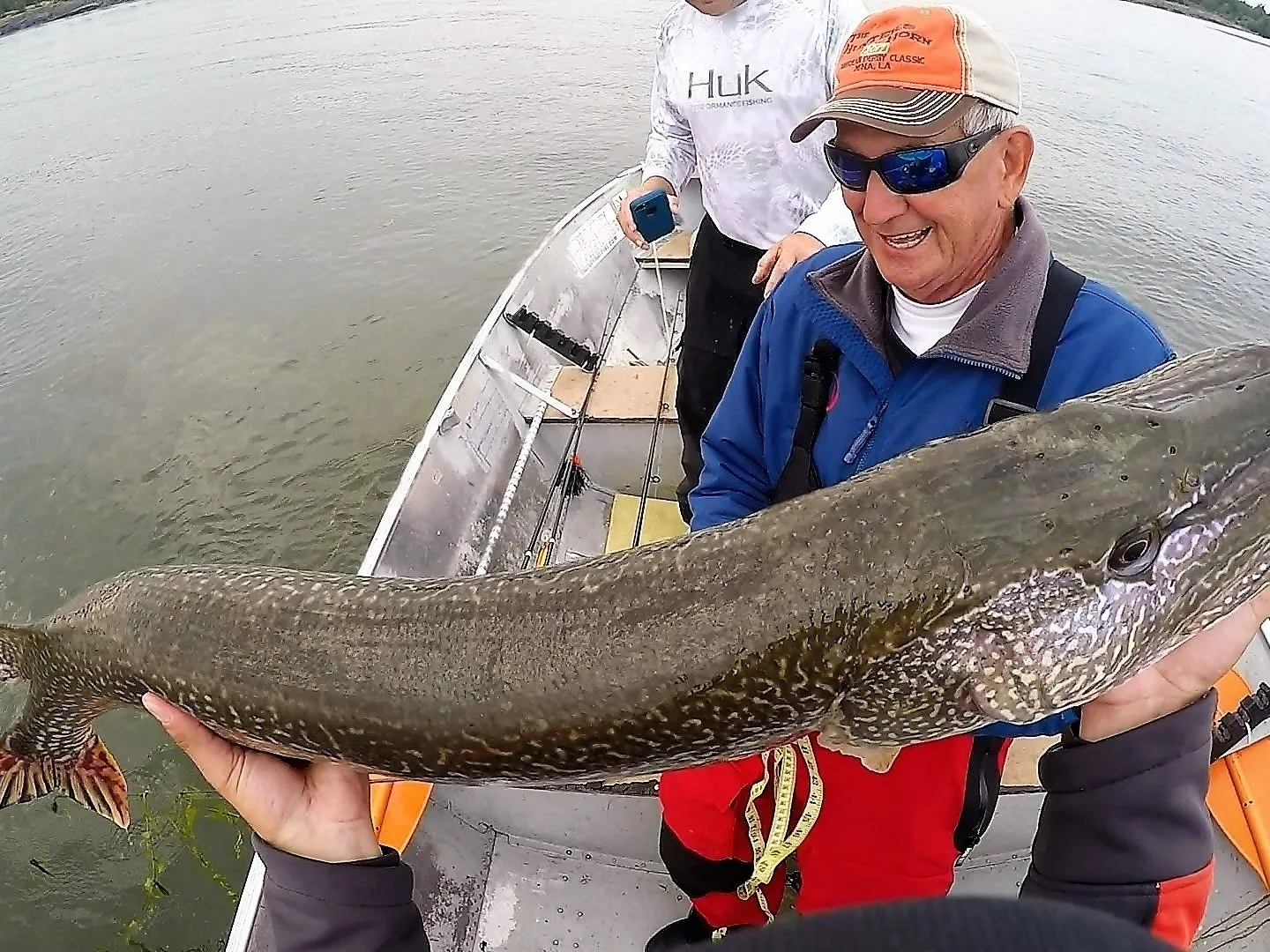
Anglers targeting a true fifty-inch subarctic giant often favour the late-season autumn window for its incredible trophy potential.
Subarctic Waters: The Great Slave Lake Advantage
Canada boasts thousands of pike lakes, but the expansive waters of the Northwest Territories offer distinct ecological advantages that produce world-class fisheries.
The Microclimates of Great Slave Lake and Taltson River
As the deepest lake in North America and the tenth-largest freshwater lake in the world, Great Slave Lake functions like an inland sea. Its massive volume of cold, pristine water moderates surrounding temperatures, creating unique aquatic microclimates.
While the main basin remains exceptionally deep and cold, expansive sheltered bays along the southern and eastern shores warm up efficiently in the summer months. Flowing into the southern shoreline, the Taltson River delta creates an intricate labyrinth of marshy channels, weed-filled flats, and deep river channels. This geographical combination provides resident pike with continuous access to rich feeding grounds and deep-water sanctuaries throughout the entire open-water season.
Why the Subarctic Outperforms Southern Fisheries
In southern Canadian lakes, warm summer water temperatures often cause large pike to become lethargic, pushing them into deep, poorly oxygenated thermoclines where they are difficult to catch.
In the Northwest Territories, however, the water rarely gets excessively warm. Pike remain active, aggressive, and accessible in relatively shallow to moderate depths all summer long. Furthermore, due to the extreme remoteness of the region, these fish experience virtually zero angling pressure compared to southern drive-to destinations. This enables them to reach advanced ages, growing to legendary proportions undisturbed.
Reviewing detailed profiles of diverse Fort Resolution fish species allows visiting sportsmen to understand how northern pike coexist with lake trout and walleye across these cold-water ecosystems.
Tactical Approaches Across the Calendar
Adapting your presentations to the seasonal location of northern pike ensures consistent success on the water.
Lures, Presentations, and Seasonal Depth Shifts
- Spring Presentations: In the shallow post-spawn bays, use lightweight lures that can be worked slowly without fouling in the bottom mud. Unweighted soft-plastic jerkbaits, suspended hard jerkbaits, and slow-wobbling spoons like the classic red-and-white or five-of-diamonds produce violent reaction strikes.
- Summer Tactics: Work the cabbage beds with heavy spinnerbaits featuring large willow or Colorado blades to create intense underwater vibration. Deep-diving crankbaits, inline bucktail spinners, and soft-plastic paddle-tail swimbaits retrieved briskly along weed edges trigger instinctual ambush attacks.
- Autumn Strategies: In late August and September, upsize your offerings. Large ten-to-twelve-inch swimbaits, heavy casting spoons, and deep-jigging soft plastics presented near bottom drop-offs tempt heavily feeding autumn monsters.
Sight-Casting on the Fly in Clear Northern Bays
For fly anglers, the crystal-clear waters of the subarctic provide one of the finest big-game fly fishing experiences on Earth:
- Rod and Line Selection: Use 8-weight to 10-weight fast-action fly rods paired with intermediate or sinking-tip lines to handle wind and cast large, air-resistant streamers.
- Fly Patterns: Bulky synthetic streamers, articulated bunny strips, and flashy deceiver patterns in chartreuse, orange, white, and black imitate injured forage fish.
- Wire Leaders: Always incorporate an 18-to-24-inch section of knottable wire or 80-pound fluorocarbon bite tippet to prevent the pike's razor-sharp teeth from severing your leader.
Multi-Species Opportunities: Grayling, Trout, and Walleye
While giant pike are the primary draw, visiting the Northwest Territories allows anglers to experience a diverse array of freshwater sport.
Arctic Grayling Seasons and Light-Tackle Tactics
Flowing river rapids and clean tributaries host thriving populations of the iconic Arctic Grayling (Thymallus arcticus). Recognisable by their iridescent coloration and enormous, sail-like dorsal fins, grayling provide exceptional light-tackle sport.
If you are exploring how to fish for arctic grayling, summer is the premier season. They are enthusiastic surface feeders, making arctic grayling fly fishing a delightful change of pace. When engaging in fly fishing for arctic grayling or conventional fly fishing arctic grayling, casting dry flies like Elk Hair Caddis or small bead-head nymphs into current seams yields non-stop action. For spinning gear, small spinners and micro-spoons serve as productive arctic grayling fishing lures.
Exploring Fort Resolution and Surrounding Territories
The historic northern settlement of fort resolution Canada—frequently known to locals as fort res—serves as the primary cultural and logistical staging hub for expeditions into the southern basin of Great Slave Lake.
Situated in fort resolution nt, this historic community has deep Indigenous roots dating back centuries to the fur trade era. Accessing the remote waters near fort resolution talston allows anglers to fish untamed delta channels and rocky outer bays that rarely see human footprints. Planning an itinerary through fort resolution northwest territories ensures an authentic northern wilderness experience.
During days away from the boat, exploring the historical sites and scenic landscapes highlighted in Things To Do In Fort Resolution provides visitors with rich cultural insight into the traditions and natural heritage of the North.
Comparing Northern Lodges Across the Subarctic
When planning a bucket-list Canadian angling holiday, researching great slave lake fishing lodges and canada pike fishing lodges is essential for selecting the right outpost.
While some travellers look toward legendary northern locations like great bear lake lodge Canada or great bear lake lodge for giant lake trout, Great Slave Lake remains the undisputed king for numbers of heavy, trophy-class northern pike and walleye. When evaluating premier fishing lodges nwt, choosing an outfitter with prime location, comfortable lodging, seaworthy boats, and veteran local guides ensures your safety and angling success.
Reviewing the expansive fishing territory managed by regional outposts helps anglers visualise the vast network of bays, islands, and river deltas available for exploration.
Elevate Your Adventure with Premier Wilderness Lodging
Extracting massive pike from subarctic weedbeds requires intimate local knowledge, seaworthy equipment, and experienced guides who understand the shifting seasonal patterns of the north. Attempting to navigate the immense waters of Great Slave Lake without local expertise can lead to wasted time and unproductive days.
Partnering with an elite wilderness outfitter guarantees that you are positioned on the most productive shallow bays, river mouths, and deep cabbage beds during optimal feeding windows. Premier operations provide fully equipped 18-foot Lund boats powered by reliable outboards, comfortable wilderness cabins, hearty home-cooked meals, and private air charter transfers directly from Yellowknife.
For anglers seeking the ultimate, fully guided subarctic expedition, Taltson Bay Big Pike Lodge stands as the premier fly-in destination on Great Slave Lake. Their dedicated team ensures your safety, comfort, and angling success are prioritised from the moment your floatplane touches down on the water.
Conclusion
Timing your trip to catch Northern Pike in Canada depends on your preferred style of angling. Whether you choose the explosive, shallow-water sight-casting of spring, the stable weather and lush weedbed action of midsummer, or the heavyweight trophy hunting of early autumn, the subarctic waters of Great Slave Lake deliver an angling adventure that is second to none.
By understanding seasonal migrations, selecting the right tackle, and trusting your journey to experienced northern guides, you set the stage for an unforgettable wilderness triumph. The northern waters are clear, the cabbage beds are teeming with baitfish, and the monster pike of the Northwest Territories are waiting for your presentation. Check seasonal availability, secure your travel dates, and Book Now to reserve your private wilderness fishing adventure today.
Frequently Asked Questions (FAQs)
1. What month is the absolute best time to catch giant Northern Pike in Canada?
June and September are widely considered the two peak months. June offers incredible sight-casting in shallow bays as pike recover from spawning, while September produces the heaviest fish of the year as pike gorge on baitfish before winter.
2. Are fly-in lodges necessary for catching trophy Northern Pike in the Northwest Territories?
Yes, fly-in lodges provide access to remote, unpressured waters that cannot be reached by road. This isolation ensures healthy fish populations, pristine habitats, and minimal competition from other boats.
3. What is considered a trophy-sized Northern Pike in Great Slave Lake?
In Great Slave Lake, a northern pike measuring 40 inches or longer is considered a true trophy. Specimens exceeding 45 to 50 inches with weights surpassing 25 to 30 pounds are caught and released every season in these fertile northern waters.
4. Can I catch other fish species on a pike fishing trip?
Yes. Great Slave Lake and its tributaries support thriving populations of Lake Trout, Walleye, and Arctic Grayling, allowing anglers to target multiple species throughout their stay.
5. What type of weather should I expect during the northern fishing season?
Summer weather in the Northwest Territories is generally pleasant, with daytime temperatures ranging from 15°C to 25°C. However, northern weather can change rapidly, so packing layered clothing, thermal base layers, and waterproof outer gear is strongly recommended.