Water Conditions Report: Great Slave Lake and the Taltson River System

Published: September 15, 2026
Water is the defining force of the Canadian subarctic, governing the movements, feeding windows, and seasonal migrations of every aquatic creature inhabiting the northern wilderness. Across the vast basin of Great Slave Lake and throughout the winding labyrinth of the Taltson River delta, changing water levels, fluctuating surface temperatures, and shifting clarity dictate the rhythms of the entire fishery.
Recent seasons across the Northwest Territories have brought noticeable environmental shifts, from multi-year regional precipitation changes to intense summer warming cycles. These hydrological factors directly influence where apex predators position themselves, how baitfish school, and which presentations produce strikes.
Whether you are monitoring seasonal shifts or fine-tuning your tactical approach for an upcoming northern expedition, this comprehensive water conditions report breaks down the current hydrological state of the southern basin, explains the science behind fish positioning, and provides essential tactical guidance for navigating these subarctic waterways.
Current Subarctic Hydrology and Water Level Realities
Tracking water levels across a freshwater body of this magnitude requires looking at both broad regional trends and localised delta systems.
Assessing Water Depths Across Great Slave Lake
Great Slave Lake is a monumental body of water, plunging to a maximum depth of 614 metres in its deepest eastern basins. Following prolonged dry periods across the territorial watershed over recent years, the lake has experienced water levels sitting below historical long-term averages.
While late-season precipitation and localized inflow have stabilised the basin, lower shorelines remain evident in shallow bays. This reduced depth concentrates aquatic vegetation, compressing cabbage weed beds into tighter, shallower zones. For boaters, it also means underwater reefs, granite humps, and boulder fields sit closer to the surface, demanding heightened navigational awareness and modern electronic mapping when traversing unfamiliar bays.
Flow Rates and Current Dynamics in the Taltson River
In contrast to the lower baseline levels of the main lake, the Taltson River system continues to exhibit steady, healthy flow dynamics. As a primary tributary flowing into the southeastern reaches of the lake, the river consistently discharges cool, oxygenated water through its sprawling delta.
The confluence where the river current meets the lake basin creates distinct hydrodynamic boundaries. These current seams, eddies, and reverse flows concentrate nutrients, which in turn attract large schools of ciscoes, lake whitefish, and juvenile suckers. The consistent volume of moving water keeps the delta fertile, highly active, and chemically stable throughout the open-water season.
Temperature Gradients and Seasonal Thermal Layers
Water temperature is the primary biological trigger that dictates where fish feed, digest, and hold during the subarctic summer.
Surface Warming in the Southern Coastal Bays
During the prolonged daylight of high summer, the shallow, dark-bottomed bays along the southern coast absorb solar radiation rapidly. Surface temperatures in sheltered coves and marshy flats frequently reach 17°C to 19°C.
These warmer pockets accelerate the metabolism of resident predators, creating intense feeding periods in the early morning and late evening. The warm water fosters dense growths of broadleaf pondweed and northern watermilfoil, providing lush, shaded canopies where gamefish can rest out of direct sunlight while monitoring passing schools of baitfish.
Deep-Water Cold Layers and Thermoclines
While the shallow bays warm up, the main open basin of Great Slave Lake remains a cold, deep reservoir. A sharp thermocline forms during midsummer, separating the warmer surface layer from the freezing, oxygen-saturated water beneath.
Cold-water species retreat below this thermal boundary, holding in depths between fifteen and thirty metres. As late August approaches and air temperatures drop, the surface layer begins to cool, gradually weakening the thermocline and allowing deep-water predators to roam more freely across intermediate drop-offs and rocky shoals.
How Water Conditions Shape Fish Behaviour
Understanding the direct correlation between current water conditions and predatory habits allows anglers to target specific species with maximum efficiency.
Ambush Dynamics for Taltson River Pike Fishing
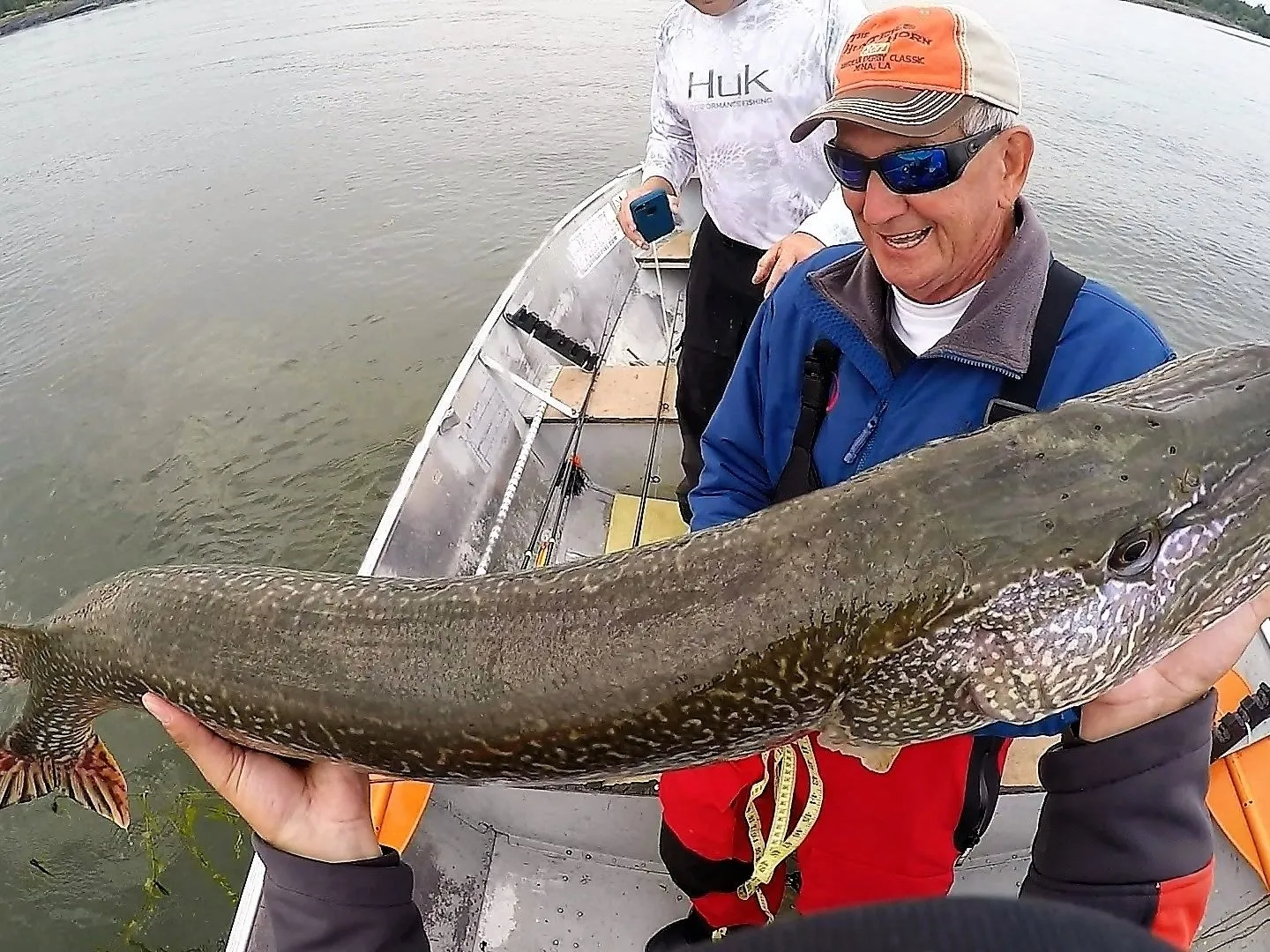
Lower water levels in the coastal bays combined with steady river inflow create ideal conditions for northern pike. Engaging in taltson river pike fishing allows anglers to target broad-shouldered water wolves that have established well-defined ambush stations along condensed weed edges.
Because the weed beds occupy a narrower depth band, pike are concentrated in higher densities. They hover motionless within the cabbage stalks, facing outward towards the current seams to strike passing forage. Large double-bladed spinnerbaits, bulky soft-plastic swimbaits, and heavy spoons retrieved erratically along these weed margins trigger aggressive reaction strikes. For a comprehensive overview of the predatory species sharing these waters, reviewing Fort Resolution fish species profiles offers valuable biological context on local forage and habitat preferences.
Water Clarity and River Seams for Arctic Grayling
The Taltson River and its rocky tributaries maintain exceptional water clarity, creating phenomenal conditions for light-tackle and fly anglers. The clear, moving current allows the iconic Arctic Grayling to spot floating insects and drifting larvae from several metres away.
For those exploring how to fish for arctic grayling, focusing on oxygenated riffles, tail-outs, and the soft water behind submerged boulders is essential. The high visibility makes arctic grayling fly fishing an intensely visual sport. When fly fishing arctic grayling, drifting dry patterns such as the Elk Hair Caddis or Royal Wulff along bubble lines produces consistent, enthusiastic surface takes.
During brighter midday conditions, fly fishing for arctic grayling with weighted bead-head nymphs drifted near the riverbed yields steady action. Conventional anglers casting small spinners and micro-jigs will find these compact presentations serve as the most dependable arctic grayling fishing lures in fast water.
Deep Drop-Offs for Heavy Lake Trout
The thermal stratification of Great Slave Lake dictates the positioning of Lake Trout throughout the summer. While international travellers often research far-northern destinations like great bear lake lodge Canada or the historic great bear lake lodge for giant trout, Great Slave Lake provides equally prolific deep-water action.
Current conditions require anglers to target deep-water drop-offs, submerged saddles, and underwater reefs in twenty to thirty-five metres of water using heavy vertical jigs or controlled-depth trolling gear. As autumn approaches and surface temperatures drop, these deep-water giants begin moving upward toward shallow, wind-swept reefs in preparation for their annual spawning run.
Navigational Considerations on the Southern Shorelines
Operating safely in remote subarctic waters requires diligent preparation, reliable marine equipment, and respect for changing water levels.
Identifying Submerged Reefs and Sandbars
Lower water baselines across the main lake mean that rocky points, shoals, and sandbars extend further into open bays than standard navigation charts might indicate. Navigating these areas safely demands the use of high-resolution sonar, GPS tracking, and a cautious throttle hand.
When entering unfamiliar bays or navigating delta channels, maintaining a slow displacement speed protects lower units and propellors from unexpected contact with granite boulders or gravel bars.
The Historic Hub of Fort Resolution Canada
Serving as the primary cultural and logistical staging hub for the southern basin, the community of fort resolution Canada connects travellers directly to these expansive waterways. Known locally as fort res, this historic settlement is the oldest continuously occupied community in the Northwest Territories.
Departing from fort resolution nt provides direct navigational access to both the open waters of the lake and the sheltered channels of the river delta. Exploring the fisheries near fort resolution talston places anglers directly on productive transition zones. Operating throughout fort resolution northwest territories gives visitors a deep appreciation for the vast scale of the northern landscape.
During days when wind conditions make open-lake travel difficult, exploring local landmarks outlined in Things To Do In Fort Resolution offers an enriching cultural experience, from heritage trading sites to scenic territorial parks.
Tactical Presentation Adjustments for High Clarity
When water clarity is high, subarctic gamefish rely heavily on visual cues, requiring anglers to refine their terminal tackle and presentation styles.
Natural Colour Profiles and Stealth Presentations
In crystal-clear bays and river channels, predatory fish have ample time to inspect artificial lures before striking. Natural colour patterns that closely imitate native forage—such as silver, white, cisco blue, and subtle olive green—consistently outperform bright, unnatural hues in calm, sunny conditions.
Longer casts and stealthy boat approaches prevent spooking fish holding in shallow weed beds. If overcast skies develop or wind churns up the shoreline, switching to higher-contrast patterns like chartreuse, firetiger, or classic red-and-white spoons helps fish locate the lure through surface turbulence.
Choosing the Right Leaders for Tooth Protection
While wire leaders are mandatory when targeting toothy northern pike, heavy black-coated wire can occasionally cause wary fish to hesitate in gin-clear shallows.
Upgrading to heavy 80-pound to 100-pound fluorocarbon leaders provides exceptional abrasion resistance against razor-sharp teeth while remaining nearly invisible underwater. For light-tackle grayling fishing in clear tributaries, stepping down to 4-pound or 5-pound fluorocarbon tippets ensures a natural, drag-free drift that fool even the most selective surface feeders.
Selecting the Premier Subarctic Outpost
Accessing the most productive, unpressured fishing grounds requires choosing a wilderness lodge with prime geographic placement and experienced personnel.
Evaluating Canada Pike Fishing Lodges
When comparing canada pike fishing lodges and evaluating top fishing lodges nwt, selecting an outpost located directly on a productive bay or delta is essential. Choosing a strategically positioned lodge ensures that great slave lake lodge fishing begins immediately upon leaving the dock, minimising long boat runs across rough, open water.
The finest great slave lake fishing lodges offer a diverse, mixed-bag fishery where anglers can target shallow-water pike, river-dwelling grayling, and deep-water lake trout in a single day. Reviewing the extensive fishing territory managed by experienced outfitters allows visitors to visualise the vast network of bays, islands, and river channels available for exploration.
The Value of Veteran Guiding
Navigating dynamic water conditions, fluctuating lake levels, and complex river deltas is best accomplished alongside experienced local guides. Professional captains understand how daily wind shifts alter water clarity, where thermal pockets form, and how seasonal currents reposition feeding schools. Their local expertise ensures both safety on the water and consistent angling success throughout your stay.
Elevate Your Adventure with Taltson Bay Big Pike Lodge
Navigating the shifting water conditions and expansive channels of the subarctic requires reliable vessels, top-tier equipment, and unmatched local knowledge. Attempting to locate productive weed lines or navigate remote river deltas without experienced guidance can lead to wasted time on the water.
Partnering with an elite outfitter ensures that you are positioned on the most productive bays, river mouths, and drop-offs during prime feeding windows. For a premier, all-inclusive wilderness expedition featuring comfortable accommodations and direct access to pristine waters, explore Taltson Bay Big Pike Lodge today. Their expert guiding team will navigate the waterways with precision, positioning you directly over trophy pike, lake trout, and grayling while delivering a safe, memorable northern adventure.
Conclusion
Current water conditions across Great Slave Lake and the Taltson River system present exceptional opportunities for sportfishermen. While lower baseline lake levels concentrate northern pike into defined shallow weed beds, the steady, oxygenated flow of the river continues to sustain thriving populations of arctic grayling and deep-water lake trout.
By understanding subarctic thermal shifts, adapting your tackle to high water clarity, and relying on the expertise of seasoned northern guides, you set the foundation for a world-class angling journey. The subarctic waters are clear, the cabbage weed beds are thriving, and the apex predators of the Northwest Territories are actively feeding. Check seasonal dates, prepare your gear, and Book Now to secure your private wilderness charter today.
Frequently Asked Questions (FAQs)
1. How do lower lake levels affect northern pike fishing on Great Slave Lake?
Lower water levels compress shallow weed beds into tighter depth zones, concentrating northern pike into well-defined ambush areas along weed edges and drop-offs, often leading to higher catch densities.
2. What is the typical water temperature on Great Slave Lake during late summer?
In late August, shallow bays and river mouths generally reach 17°C to 19°C, while the main open basin maintains much colder temperatures below the surface thermocline, typically between 8°C and 12°C.
3. Does high water clarity require changing lure colours?
Yes. In clear water, natural colours that imitate native prey (such as silver, white, and subtle olive green) are most effective. Bright or fluorescent colours are best reserved for overcast days or wind-stained water.
4. Is it safe to navigate Great Slave Lake without a professional guide?
Because Great Slave Lake is an immense inland sea with fluctuating water levels and unmarked rocky reefs, navigating without intimate local knowledge and modern marine electronics is not advised. A professional guide ensures safe navigation and optimal positioning.
5. How do river flow rates impact Arctic Grayling fishing?
Steady river flow delivers a continuous supply of drifting insects and aquatic larvae to holding grayling. Current seams, riffles, and eddy lines create predictable feeding lanes where grayling actively rise to surface flies and small lures.